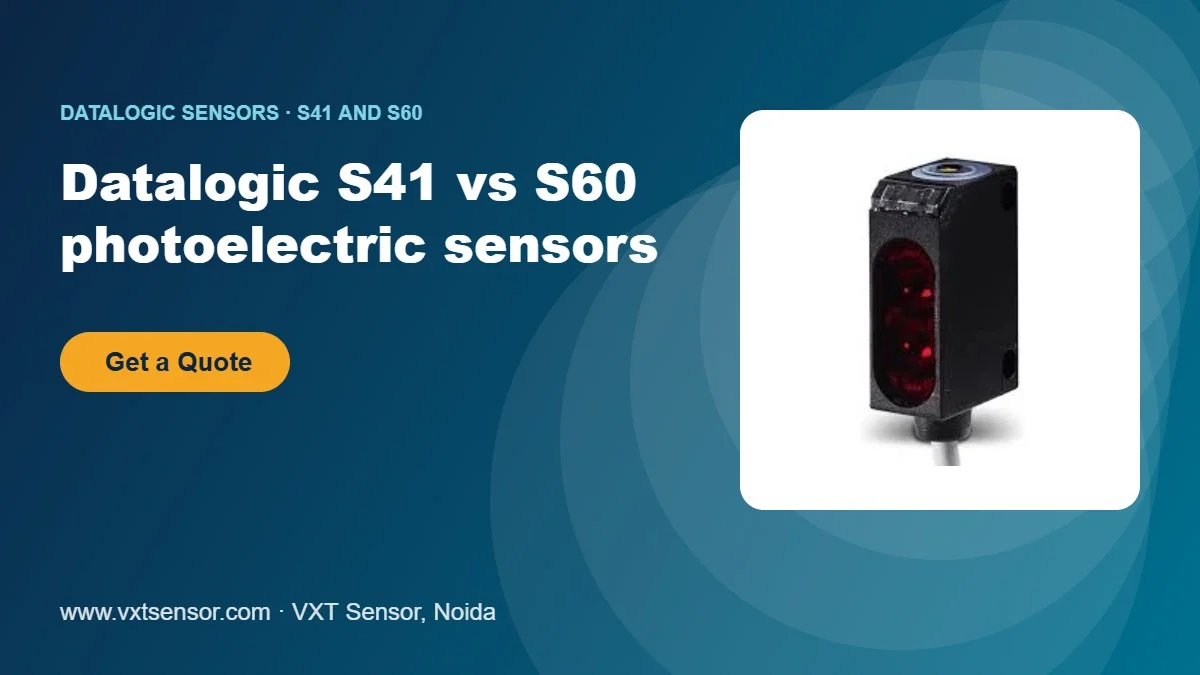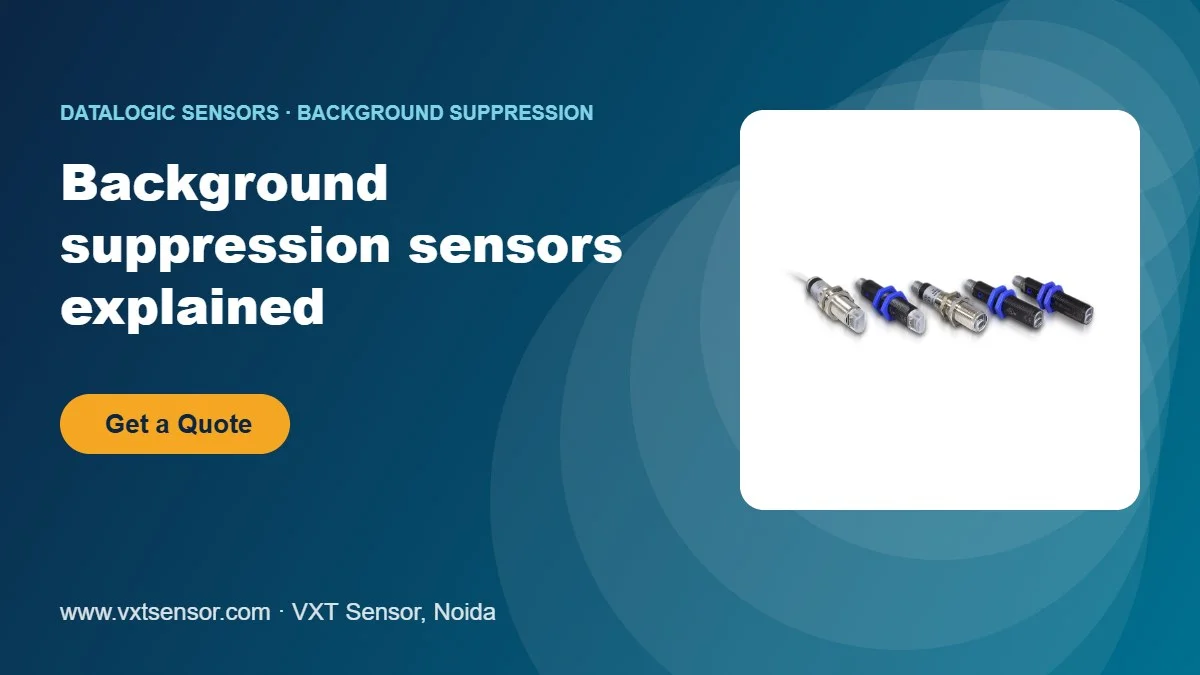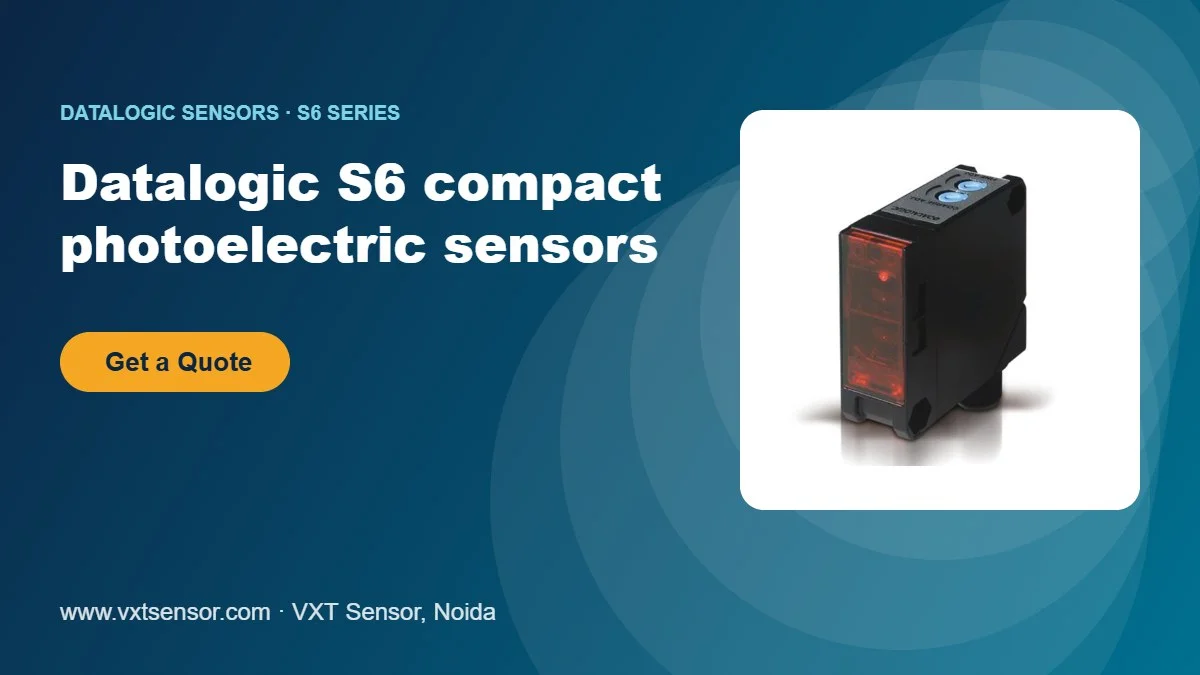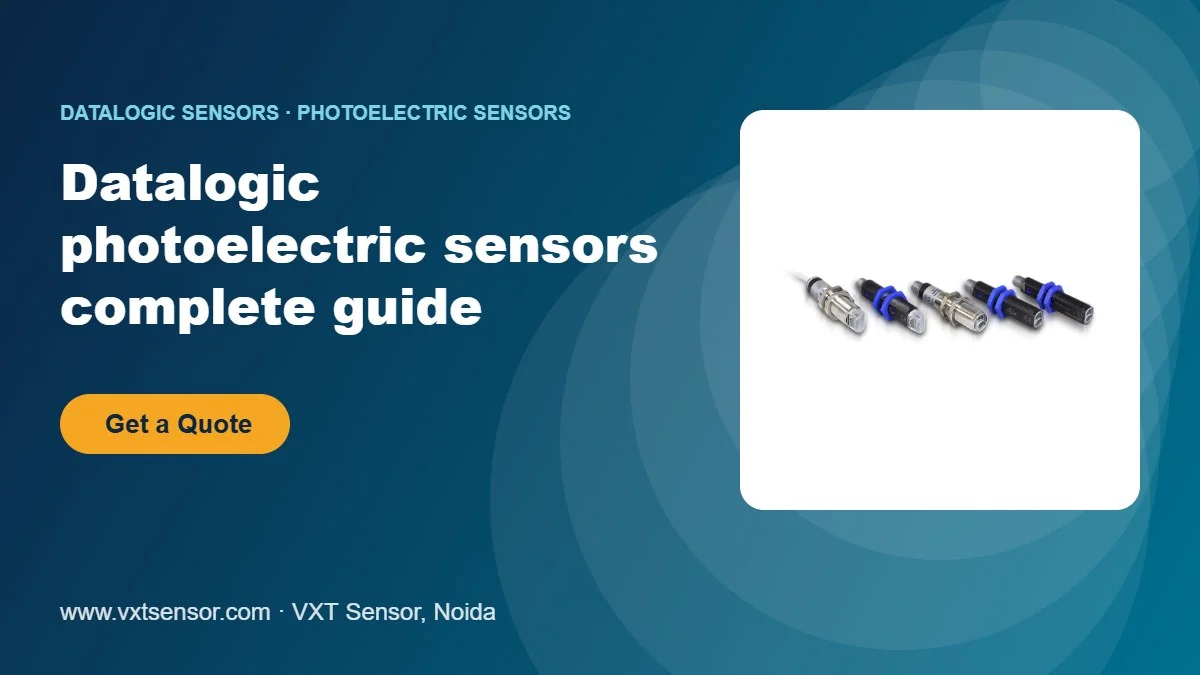
Photoelectric sensors detect objects with a beam of light, without touching them. Datalogic (now Datasensing) offers one of the widest photoelectric ranges in industry, from tiny sensors for electronics assembly to long-range sensors for warehouses. This guide explains the main series, the sensing modes and how to choose the right model.
Main Datalogic photoelectric series
| Series | Housing | Best for | Example |
|---|---|---|---|
| SM | Subminiature | Very tight spaces, small parts | SM-PR-2-D30-PP |
| S3N | Miniature rectangular | Compact machines, background suppression, laser | S3N-PR-2-M01-P |
| S5N | M18 tubular, plastic or metal | General purpose, easy replacement | S5N-PA-5-B01-PP |
| S50 / S51 | M18 tubular, multifunction | Wide choice of optics and outputs | S50-PA-5-B01-PP |
| S62 | Compact rectangular | Conveyors, retroreflective up to several metres | S62-PA-5-B01-PP |
| S8 | Compact rectangular | Background suppression on bottles and packs | S8-PR-5-W03-PP |
| S300 | Rectangular, long range | Long distances, dusty or large areas | S300-PR-1-B01-RX |
The four sensing modes
- Through-beam: separate emitter and receiver facing each other. Longest range and most reliable, but needs wiring on both sides.
- Retroreflective / polarised retroreflective: sensor and reflector. Easy to install on conveyors; the polarised version ignores shiny objects.
- Diffuse (proximity): the object itself reflects the light back. Simple, one-sided, but range depends on the object colour.
- Background suppression: a diffuse sensor that detects only up to a set distance and ignores what is behind. Ideal for dark objects in front of bright backgrounds.
Read the full explanation in our guide to photoelectric sensing modes.
How to choose a Datalogic photoelectric sensor in 6 steps
- Object: size, colour, shiny or transparent? Clear bottles may need an ultrasonic sensor instead.
- Distance: how far is the object from the sensor, and is there a background behind it?
- Sensing mode: choose from the four modes above.
- Space: how much room is there? This decides between SM, S3N, M18 tubular or rectangular housings.
- Output: PNP or NPN, normally open or closed. See PNP vs NPN explained.
- Connection: cable or M8/M12 connector, and the supply voltage (usually 10–30 Vdc).
Fibre optic sensors for special cases
When the space is too small even for an SM sensor, or the area is hot, a fibre optic amplifier such as the S7 with OF optical fibres puts only a thin fibre at the detection point. See the S7 fibre amplifier guide.
Frequently asked questions
What is the most popular Datalogic photoelectric sensor?
In Indian plants the M18 tubular S5N and the compact S62 are among the most common, because they suit most conveyor and packaging jobs and are easy to replace.
What is the difference between diffuse and background suppression?
A diffuse sensor reacts to any object that reflects enough light. A background suppression sensor detects only up to a set distance and ignores objects or surfaces behind it.
Can a photoelectric sensor detect transparent bottles?
Some polarised retroreflective models can, but an ultrasonic sensor is often more reliable for clear glass and PET.
Datalogic or Datasensing: are they the same sensors?
Yes. Datalogic moved its sensor business to the Datasensing brand. Model codes and datasheets stay the same.
Browse the full Datalogic photoelectric sensor range.
Buy from VXT Sensor
VXT Sensor, Noida, supplies genuine Datalogic (Datasensing) sensors across India. Send us the model code or describe your application, and we will confirm the right model, datasheet, price and delivery time. Send an enquiry or call +91 99530 39482.
Looking for the right Datalogic sensor?
Genuine products from VXT Sensor, Noida. Tell us your application and we reply with the right model, price and delivery time.